
.jpg)

Globalization of K-Food: Now It’s Practice, Not Experiment[World-OKTA Songdo Conference Exclusive Interview] Jung Hoon Park, Head of Guljak Topokki Chicken Australia
At the 2025 World-OKTA (World Federation of Overseas Korean Traders Association) World Leaders Convention held in Songdo, Incheon, Jung Hoon Park, head of Guljak Topokki Chicken Australia, was confident and direct.
“The opening of our Melbourne store wasn’t just about launching a new branch—it was the signal flare for the globalization of Korea’s street food culture,” he said.
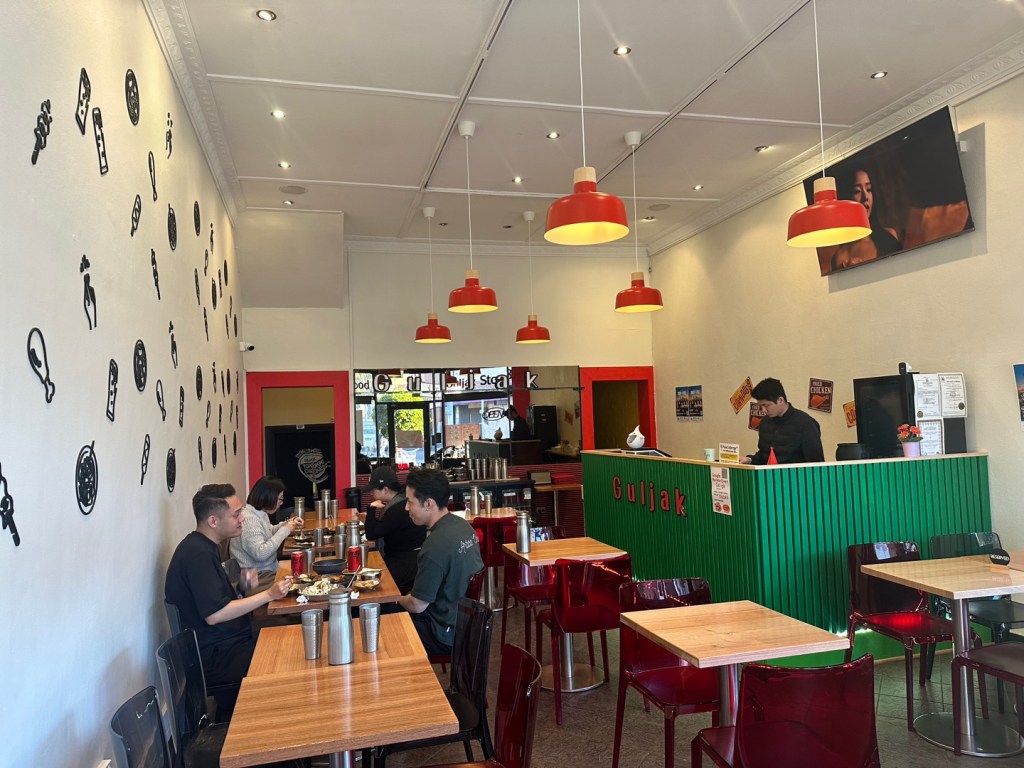
In December 2021, Park opened Geoljak Tteokbokki Chicken’s first Australian branch in the lower ground floor of Emporium Melbourne, a premium department store in the heart of the city. Since then, he has proven through real results that K-Food is not a passing trend but a sustainable global opportunity.


Q1. What led you to decide on expanding to Australia?
▲ After living in Australia for nearly 20 years, I became convinced that Korean food could succeed in the local market. Melbourne is a multicultural city where foods from around the world coexist. I saw it as the perfect testing ground for K-Food’s potential.
Q2. Why did you choose Emporium Melbourne as the first location?
▲ Emporium is a landmark shopping complex in central Melbourne, surrounded by international brands. It has a high volume of young professionals and tourists, making it ideal for brand visibility. It was also the perfect place to elevate the image of “Korean street food” into something modern and premium.
Q3. How did local customers react to tteokbokki and Korean-style chicken?
▲ Initially, most people were simply curious—“What’s tteokbokki?” But once they tried it, many became hooked on its sweet and spicy flavor. The combination of tteokbokki and chicken became especially popular. Now, during lunchtime peak hours, we have lines out the door.
Q4. What are Geoljak Tteokbokki Chicken’s main competitive strengths?
▲ First, our in-house sauce production system. It ensures consistent quality across all stores. Second, our localization strategy. We adjusted spice levels and added vegetarian and cheese options to appeal to a broader audience, without losing our Korean identity.
Q5. How does collaboration with the Korean headquarters work?
▲ We work closely with the headquarters on menu development and quality control. Leveraging their sauce-manufacturing expertise, we co-develop recipes suited for the local market. The Australian corporation then produces and distributes these sauces locally, reducing logistics costs and improving efficiency.
Q6. How do you assess K-Food’s competitiveness in the local dining market?
▲ Japanese foods like sushi and ramen dominated the market for a long time. But now, K-Food is rapidly rising, supported by the Korean Wave and pop culture. Locals find Korean food both exotic and familiar—it’s spicy, flavorful, and comforting.
Q7. What is the significance of participating in the World-OKTA Songdo Conference?
▲ It’s an opportunity to connect with Korean business leaders from around the world and to secure practical support for overseas franchise expansion. Through this conference, we’re discussing collaboration opportunities with other country branches and even exploring the possibility of co-branded ventures.
Q8. What are your future expansion plans and goals?
▲ We plan to open more stores across major Australian cities, while also expanding into Southeast Asian markets such as Thailand, Malaysia, and Singapore. Our long-term goal is to build K-Street Food into a globally recognized franchise brand.
Q9. How has your previous career helped in this business?
▲ I worked for 17 years at Labelmakers Group, managing global distribution and brand strategy. That experience has been invaluable for franchise management, operations, and branding. It helped me understand local consumer trends and the dynamics of retail environments.
Q10. What advice would you give to young Koreans aspiring to start businesses abroad?
▲ Overseas entrepreneurship is full of challenges, but maintaining one’s cultural identity is crucial. Stay true to the essence of Korean taste and hospitality while listening to the local market. Don’t be afraid to take action—success comes to those who enter the field, not just plan from the sidelines. That’s the true spirit of global entrepreneurship.

At the end of the interview, Park emphasized,
“The journey of Geoljak Tteokbokki Chicken is more than one brand’s success—it’s the beginning of K-Food becoming a mainstream global category.”
His mission to spread the taste of Korea continues to thrive in the streets of Melbourne.




Leave a Reply